Every year, hundreds of workers suffer severe injuries—or worse—because machines energized unexpectedly during maintenance. The solution isn’t complex technology or expensive overhauls. It’s a disciplined, repeatable process known as lockout and tagout (LOTO).
Despite widespread awareness, LOTO violations remain among OSHA’s most frequently cited standards. Why? Because too many organizations treat it as a box-checking exercise rather than a life-preserving system.
This guide breaks down what effective lockout and tagout procedures look like in practice—not just what regulations say, but how they prevent real harm.
What Are Lockout and Tagout Procedures?
Lockout and tagout refer to the practices used to ensure machines or equipment are isolated from all energy sources before servicing, repair, or cleaning.
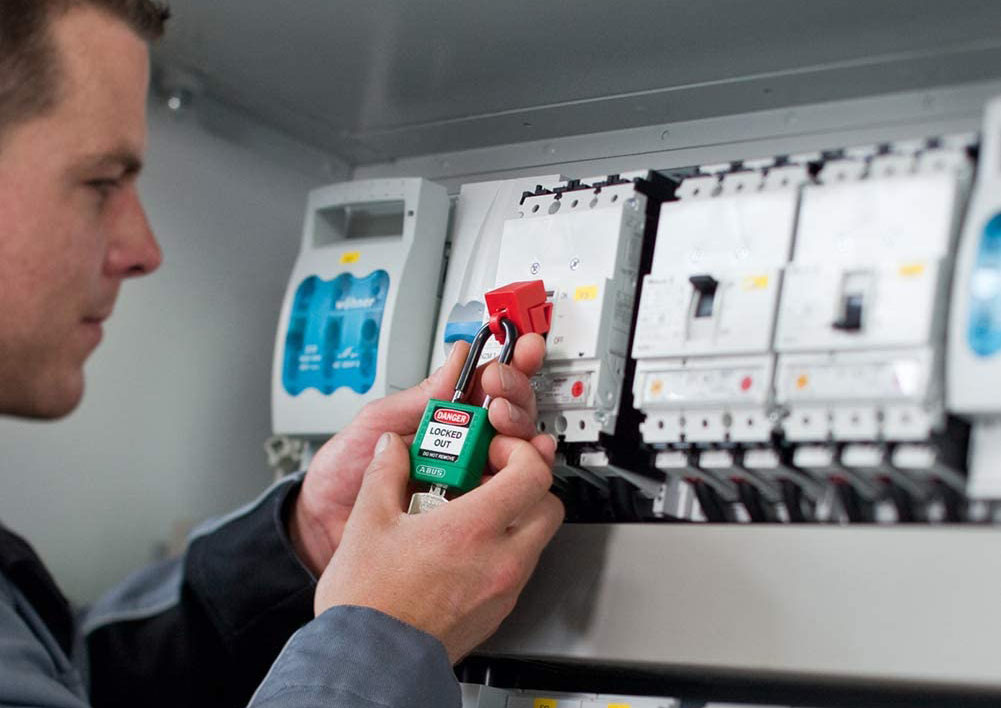
- Lockout means physically securing an energy-isolating device with a lock so that the equipment cannot be operated until the lock is removed.
- Tagout involves placing a warning tag on the same device to communicate that the equipment is not to be operated until the tag is removed.
While tagout can be used alone, lockout is the preferred method because it provides physical restraint.
These procedures apply to all forms of energy: electrical, hydraulic, pneumatic, chemical, thermal, and mechanical. A single overlooked spring under tension or a pressurized line can turn routine maintenance into a catastrophe.
Why LOTO Matters: The Human and Legal Stakes
Between 1984 and 2022, OSHA estimated that proper lockout/tagout practices could prevent nearly 120 fatalities and 50,000 injuries annually in the U.S. alone. The majority of these incidents involve workers caught in machinery, burned by steam, or shocked by live circuits—all preventable with correct procedures.
From a legal standpoint, non-compliance carries steep penalties. In 2023, OSHA issued fines exceeding $145,000 for LOTO violations at a single manufacturing plant. But beyond fines, the cost of downtime, litigation, and reputational damage is often worse.
More importantly, the human cost is irreversible. One maintenance technician bypassed a safety interlock because “it always takes too long to follow LOTO.” Seconds later, a conveyor activated and pulled his arm into a drive roller. This isn't hypothetical—it happened in Ohio in 2022.
Proper LOTO isn’t about bureaucracy. It’s about ensuring every worker goes home intact.
The 6-Step LOTO Procedure: A Real-World Framework
Following a standardized sequence is critical. Deviations increase risk exponentially. Here’s the widely accepted six-step LOTO procedure, validated by OSHA and NIOSH.
1. Preparation Before any work begins, the authorized employee must identify:
- The type and magnitude of energy involved
- The methods to isolate and control that energy
- The specific lockout devices needed
Example: Servicing a hydraulic press requires identifying not only the main electrical disconnect but also residual pressure in accumulators.
2. Notification Alert all affected employees that maintenance is about to begin and equipment will be shut down. This includes nearby operators who might not be directly involved but could be impacted.
Failure here causes accidents. In one case, a painter sprayed solvent near a machine assumed to be off—only for it to start during servicing, igniting vapors.
3. Equipment Shutdown Shut down the machine using normal stopping procedures. Never assume turning off a control switch de-energizes the system. Many do not interrupt power to all components.
Use the emergency stop only in emergencies—not as a shutdown method.
4. Isolation and Lockout Isolate all energy sources. This may include:
- Electrical breakers
- Valve closures
- Blockades for gravity-powered systems
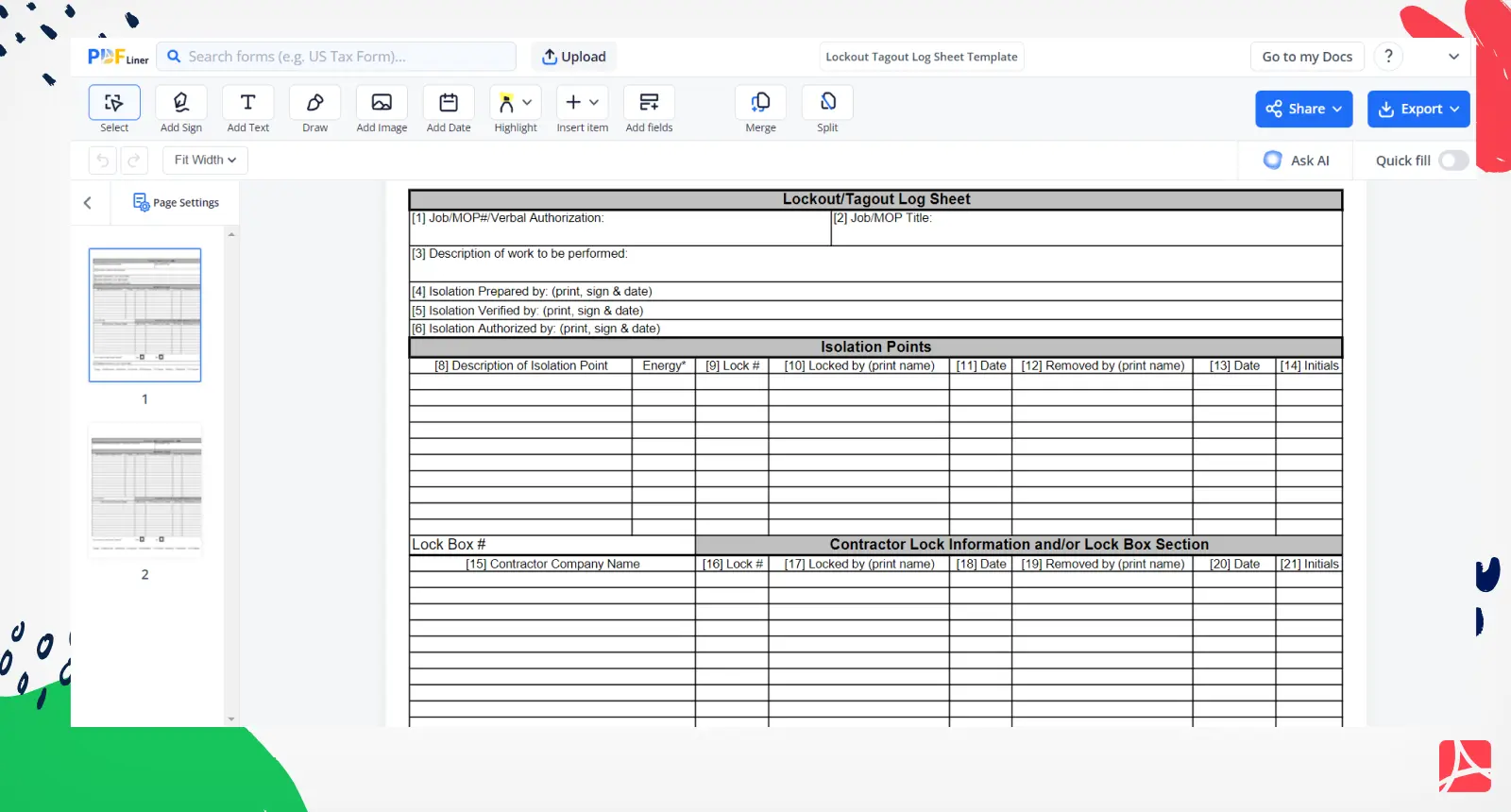
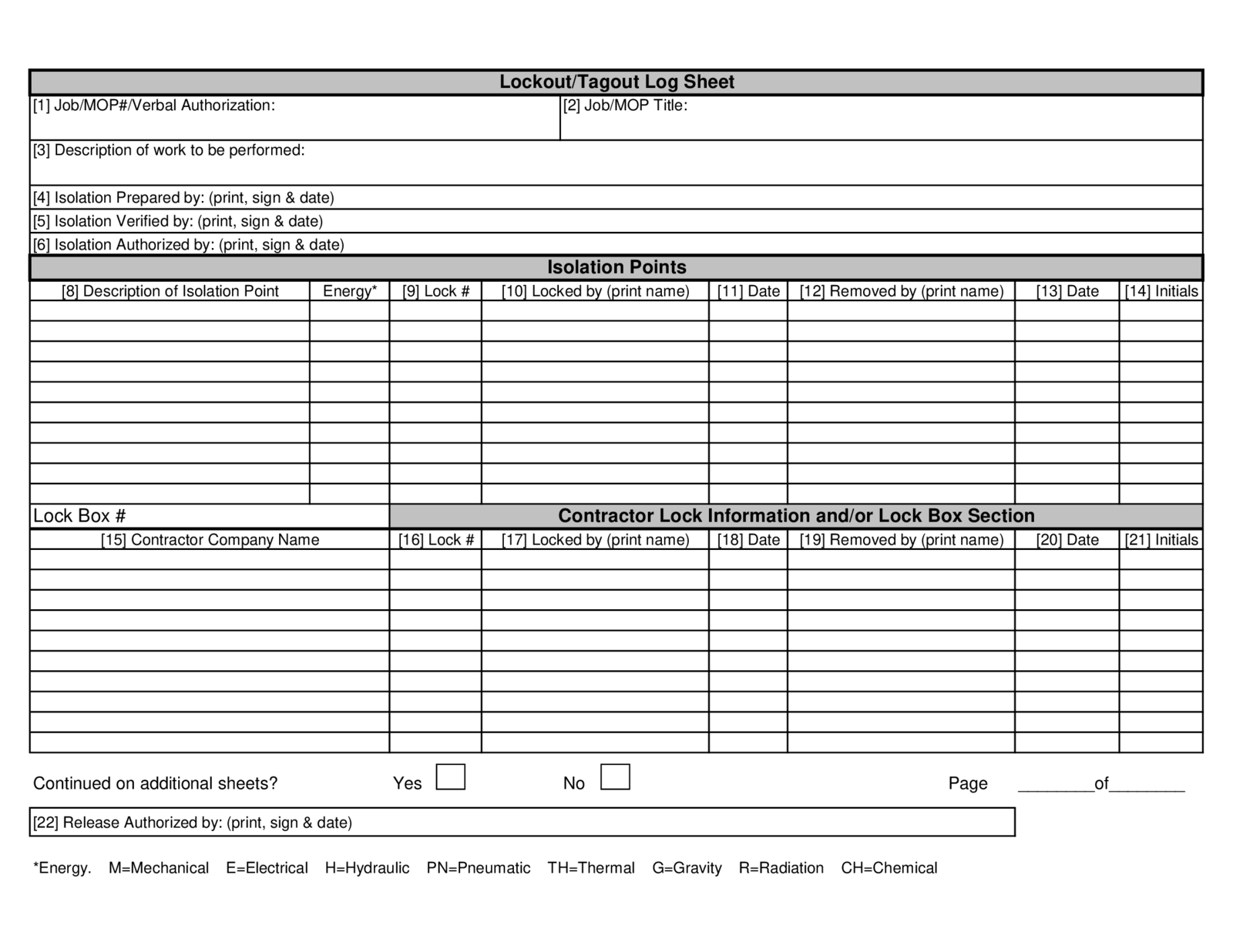
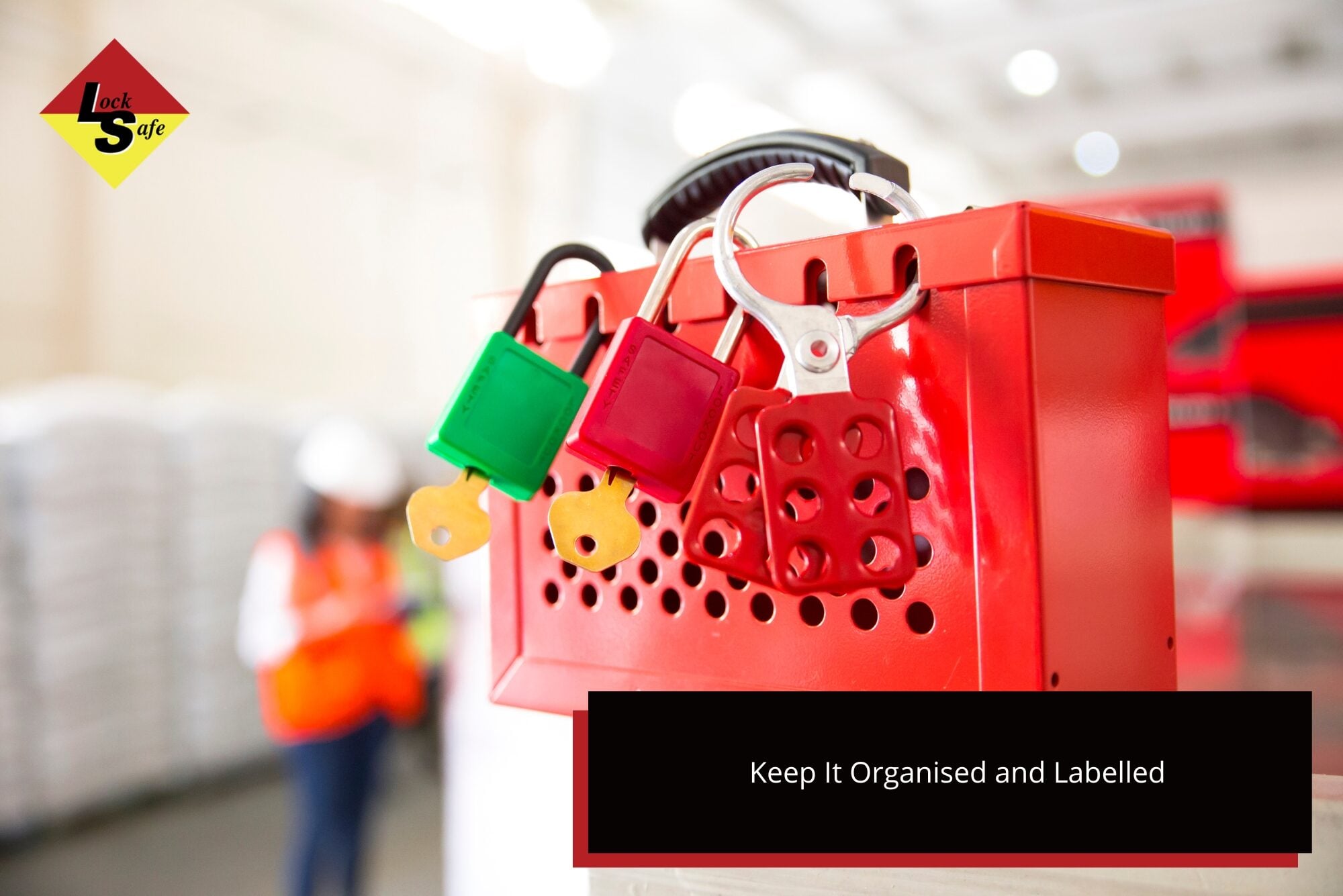
Each isolation point gets a lock and tag. Each worker performing service applies their own personal lock. Group lockout boxes are used when multiple people are involved.
Common mistake: Locking only the main disconnect while leaving secondary lines pressurized.
5. Control of Stored Energy Relieve, disconnect, or block stored energy. Examples:
- Bleeding hydraulic lines
- Draining capacitors
- Blocking elevated parts with safety props
A technician once removed a guard on a conveyor without blocking the tensioned belt. The sudden release crushed his hand.
6. Verification of Isolation
This is the most critical step. After lockout, attempt to start the equipment using normal controls to confirm it cannot operate. Then check for residual voltage, pressure, or motion.
Never skip verification—even if you “know” it’s off.
Common LOTO Mistakes That Endanger Teams
Even experienced workers make errors under pressure. These are the most frequent—and dangerous—mistakes:
- Using someone else’s lock – Personal locks should never be shared. Only the owner can remove them.
- Tag-only systems on high-risk equipment – Tags can be ignored or removed. Locks enforce physical control.
- Incomplete energy source identification – Overlooking secondary power sources like backup batteries or pneumatic reservoirs.
- Failure to retrain – New hires or temporary workers often aren’t fully onboarded into LOTO protocols.
- Rushing the process – Production pressure leads to shortcuts. A five-minute “quick fix” without LOTO isn’t worth the risk.
A food processing plant in California had a strong LOTO policy—but allowed “temporary bypasses” for sensor adjustments. One bypass led to an auger starting mid-maintenance. Result: a fatality and a $200,000 OSHA fine.
Policies only work when they’re enforced without exception.
Who Is Responsible? Roles in LOTO Safety
Clear roles eliminate confusion during critical moments.
Authorized Employee
- Has been trained and certified to implement LOTO
- Applies locks and tags
- Performs verification
- Only they can remove their own lock
Affected Employee
- Operates or uses the equipment
- Trained on when LOTO occurs but doesn’t perform servicing
- Must respect lockout devices and never attempt to restart locked equipment
Supervisor
- Ensures procedures are followed
- Conducts periodic inspections (at least annually)
- Verifies training and compliance
Misalignment here creates gaps. If a supervisor allows a worker to “just check” a jammed machine without lockout, accountability erodes.
Equipment-Specific LOTO Challenges
Not all machines pose the same risks. Tailoring procedures is essential.
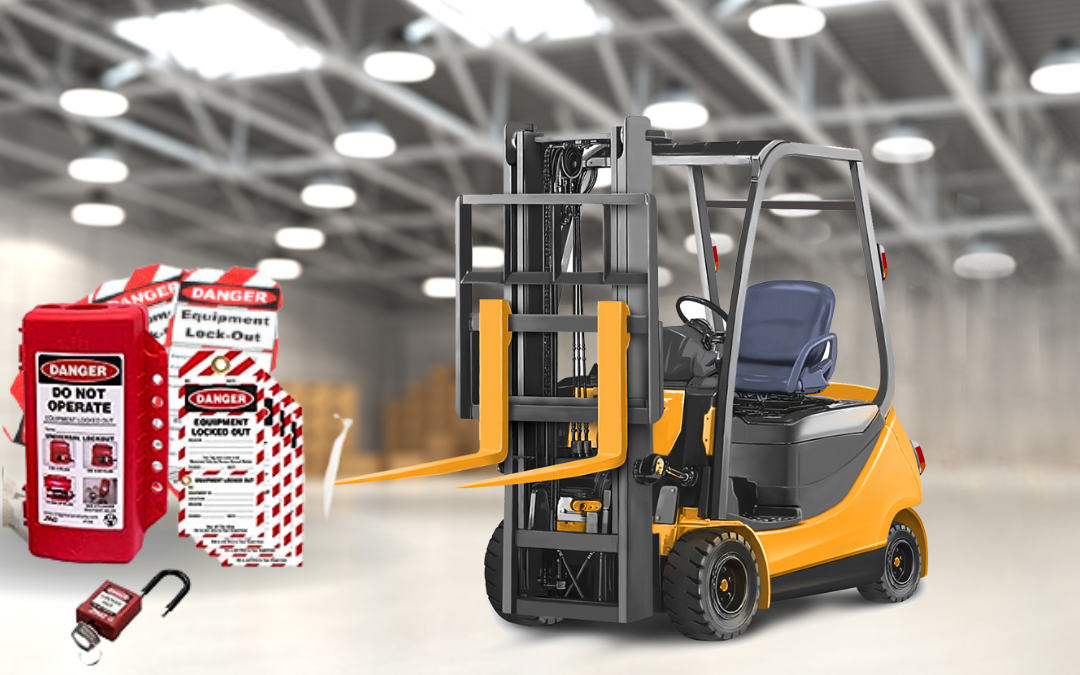
Conveyor Systems
- Multiple energy sources: motors, gravity, tension
- Long shutdown paths—locks often needed at several points
- Stored energy in rollers and belts
Solution: Install designated lockout stations at each access point with standardized padlocks and tags.
Press Machines
- High-force mechanical or hydraulic systems
- Flywheels store kinetic energy
- Interlocks can be defeated
Best practice: Use energy-dissipation procedures before applying locks, and verify with dial indicators or pressure gauges.
HVAC Units
- Often have electrical, refrigerant, and fan components
- Located in hard-to-access areas
- Maintenance may require working at height
Risk: Refrigerant lines under pressure can cause frostbite or explosive release. Lockout must include valve isolation and depressurization.
LOTO Devices: Tools That Enforce Safety
The right equipment makes LOTO reliable and consistent. Standardized devices reduce human error.
| Device | Purpose | Best Use Case |
|---|---|---|
| Lockout hasps | Allow multiple locks on one disconnect | Group maintenance |
| Circuit breaker locks | Prevent re-energizing breakers | Electrical panels |
| Valve lockouts | Secure open/closed positions | Pneumatic/hydraulic lines |
| Plug lockouts | Cover electrical cords | Portable tools |
| Lockout boxes | Store keys for complex systems | Multi-step shutdowns |
Color-coding locks by department or energy type (e.g., red for electrical, blue for pneumatic) improves clarity. Personal locks should always be keyed differently to prevent unauthorized removal.
Training and Audits: The Backbone of Compliance
Training isn’t a one-time event. OSHA requires retraining: - When procedures change - When an employee shows inadequate knowledge - At least every three years
Effective training includes: - Hands-on practice with real equipment - Simulated lockout scenarios - Written and performance evaluations
Audits are equally important. During an annual audit at a Midwest refinery, inspectors found: - 30% of lockout devices were damaged - 15% of tags had illegible information - Two instances of shared locks
Corrective actions were implemented immediately. Without audits, those issues could have led to an incident.
Making LOTO Part of Your Safety Culture
The best procedures fail without cultural support. Leadership must model compliance. If a manager says, “Just fix it fast—we’re behind,” they’ve undermined the entire system.
Build accountability by: - Including LOTO adherence in performance reviews - Recognizing safe behavior publicly - Investigating close calls, not just incidents
One automotive plant reduced LOTO violations by 78% in 18 months by appointing “LOTO champions” in each department—peer leaders who coached others and reported concerns.
Procedures protect machines. Culture protects people.
Final Thoughts: Safety Is a Process, Not a Procedure
Lockout and tagout procedures are more than compliance checkboxes. They represent a commitment to human dignity and operational integrity.
Every lock applied, every tag read, every verification test done—it’s not about satisfying a regulator. It’s about ensuring that the person working on that machine isn’t the next headline.
Implement the six steps rigorously. Train relentlessly. Audit honestly. And never let urgency override safety.
Do that, and you don’t just avoid fines—you build a workplace where people trust the system because they know it works.
Frequently Asked Questions
What is the difference between lockout and tagout? Lockout uses a physical lock to prevent equipment startup, while tagout uses a warning tag. Lockout is more secure and preferred when feasible.
Who can remove a lockout device? Only the authorized employee who applied the lock may remove it, unless a formal retrieval process is followed.
Do portable tools require LOTO? Yes, if they’re being serviced and connected to energy sources. Plug lockouts are commonly used.
Can tagout be used without lockout? Yes, but only if the tag provides equivalent protection and the employer can prove it’s as effective.
How often should LOTO procedures be inspected? At least annually, and more frequently if equipment or processes change.
Are LOTO procedures required for routine production activities? Only if the activity involves servicing or clearing jams where unexpected startup could cause injury.
What should a tagout tag include? Name of the authorized employee, date, reason for lockout, and contact information.
FAQ
What should you look for in Mastering Lockout and Tagout Procedures for Workplace Safety? Focus on relevance, practical value, and how well the solution matches real user intent.
Is Mastering Lockout and Tagout Procedures for Workplace Safety suitable for beginners? That depends on the workflow, but a clear step-by-step approach usually makes it easier to start.
How do you compare options around Mastering Lockout and Tagout Procedures for Workplace Safety? Compare features, trust signals, limitations, pricing, and ease of implementation.
What mistakes should you avoid? Avoid generic choices, weak validation, and decisions based only on marketing claims.
What is the next best step? Shortlist the most relevant options, validate them quickly, and refine from real-world results.