Equipment failure isn’t always the most dangerous part of maintenance—improper shutdown procedures are. Every year, hundreds of workers suffer serious injuries during servicing because machinery was accidentally re-energized. The lockout tagout sign out sheet is not just paperwork; it’s a critical control point that closes the loop on safety.
This document tracks who locked out equipment, when, why, and most importantly, who authorized its return to service. Without it, even a well-designed LOTO program collapses under miscommunication.
Why a Sign Out Sheet Is Non-Negotiable
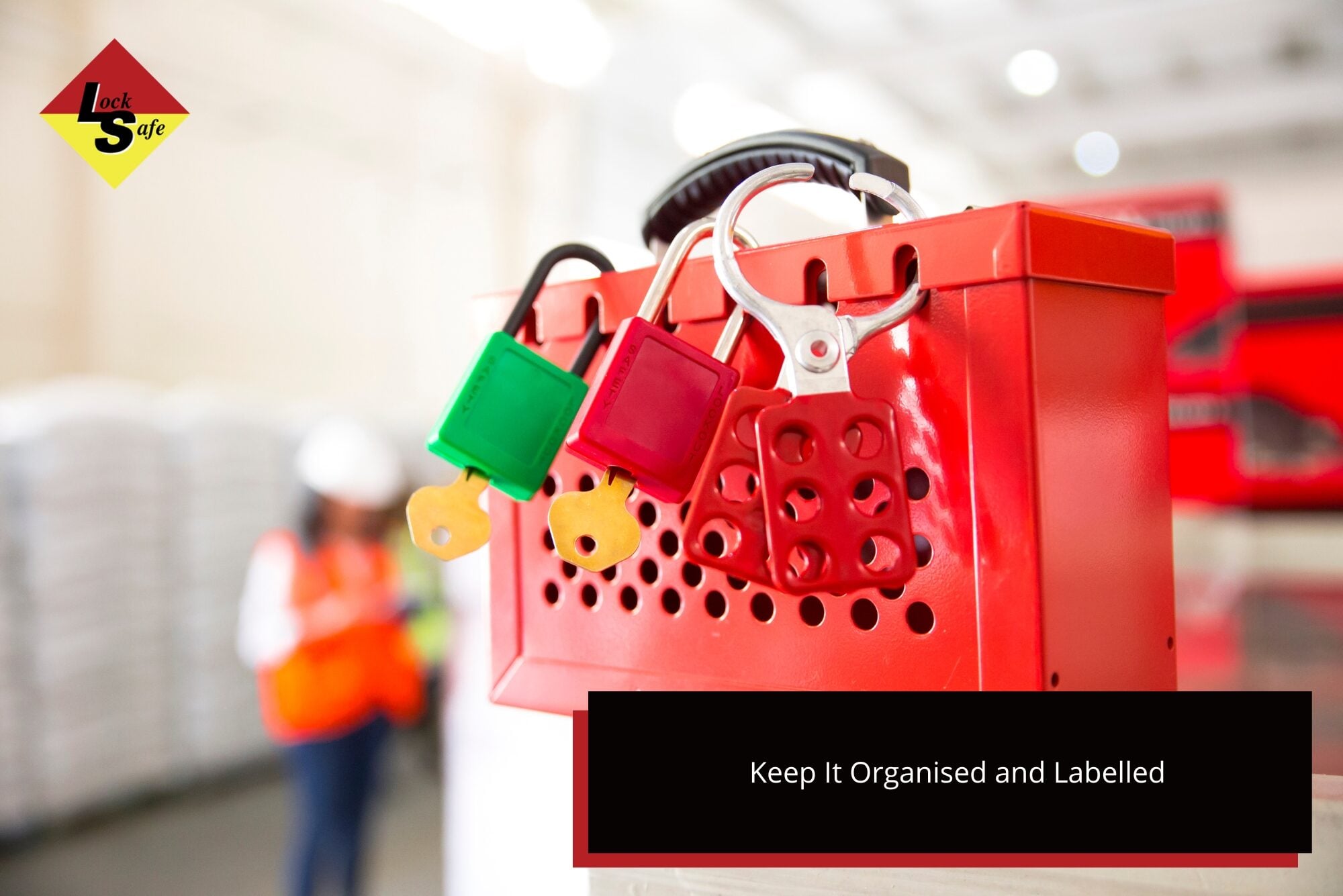
A lockout tagout (LOTO) procedure involves isolating energy sources, applying locks and tags, and verifying zero energy. But re-energizing is just as high-risk. That’s where the sign out sheet steps in.
It ensures every technician who applied a lock has removed it—personally. It creates a verifiable audit trail for compliance and serves as a communication hub during multi-craft work. Think of it as a shared logbook for mechanical and electrical safety.
In facilities where multiple crews service a single conveyor line, boiler, or press, skipping the sign out sheet invites disaster. One worker finishes their task, removes their lock, assumes others are done—and hits the start button. The result? Catastrophic.
Real-World Gap: Assumption vs. Verification
A plant in Ohio reported a near-miss when a maintenance electrician re-energized a crusher, unaware a mechanic was still inside the housing. The mechanic had locked out the motor but never signed the central sign out sheet. The electrician, seeing only his own lock removed, assumed clearance. This scenario exposes a fatal flaw: reliance on visual checks without documentation.
The sign out sheet forces accountability. It requires each worker to initial their release—only after confirming their work is complete and tools are clear.
Anatomy of an Effective LOTO Sign Out Sheet
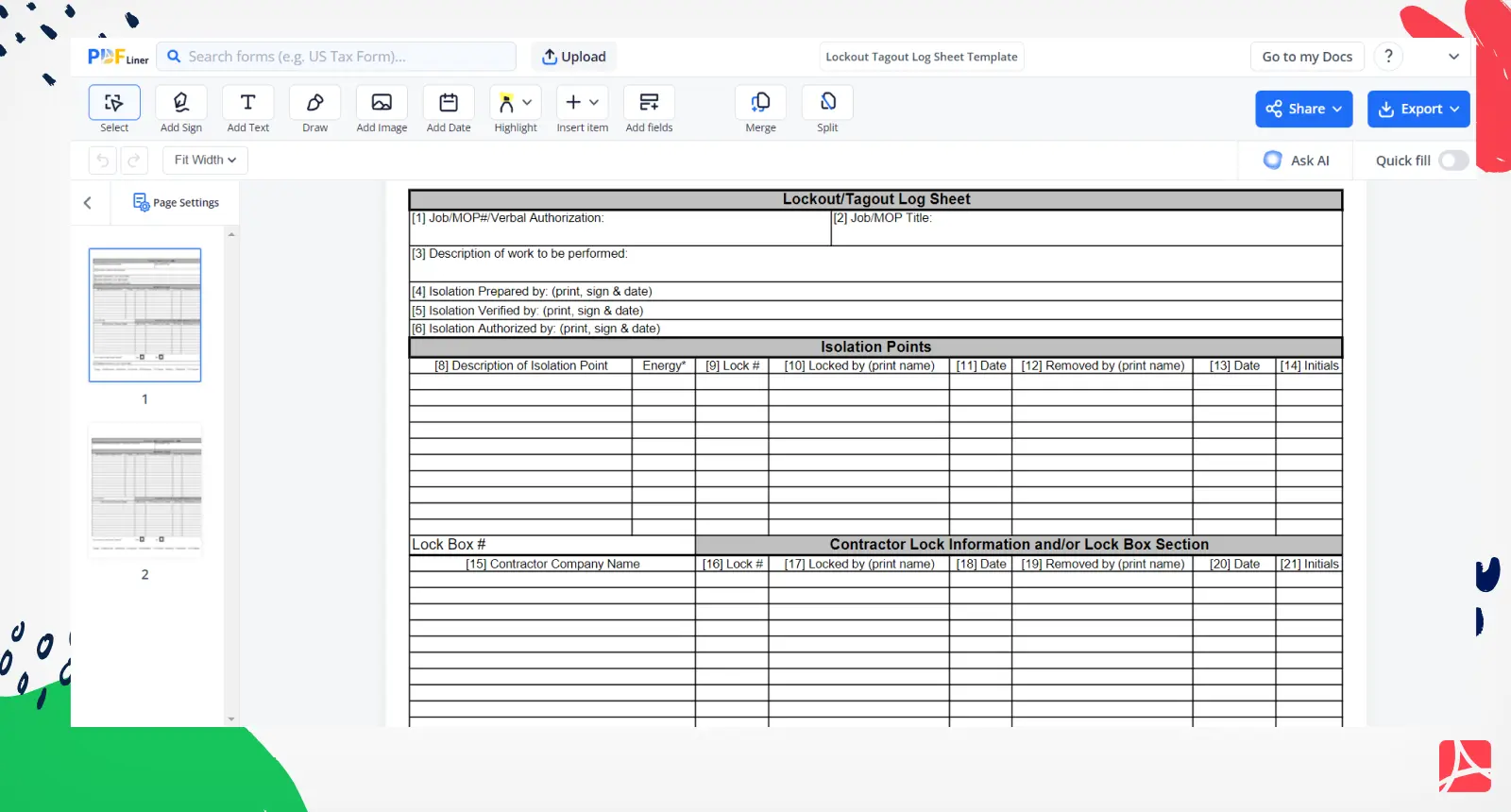
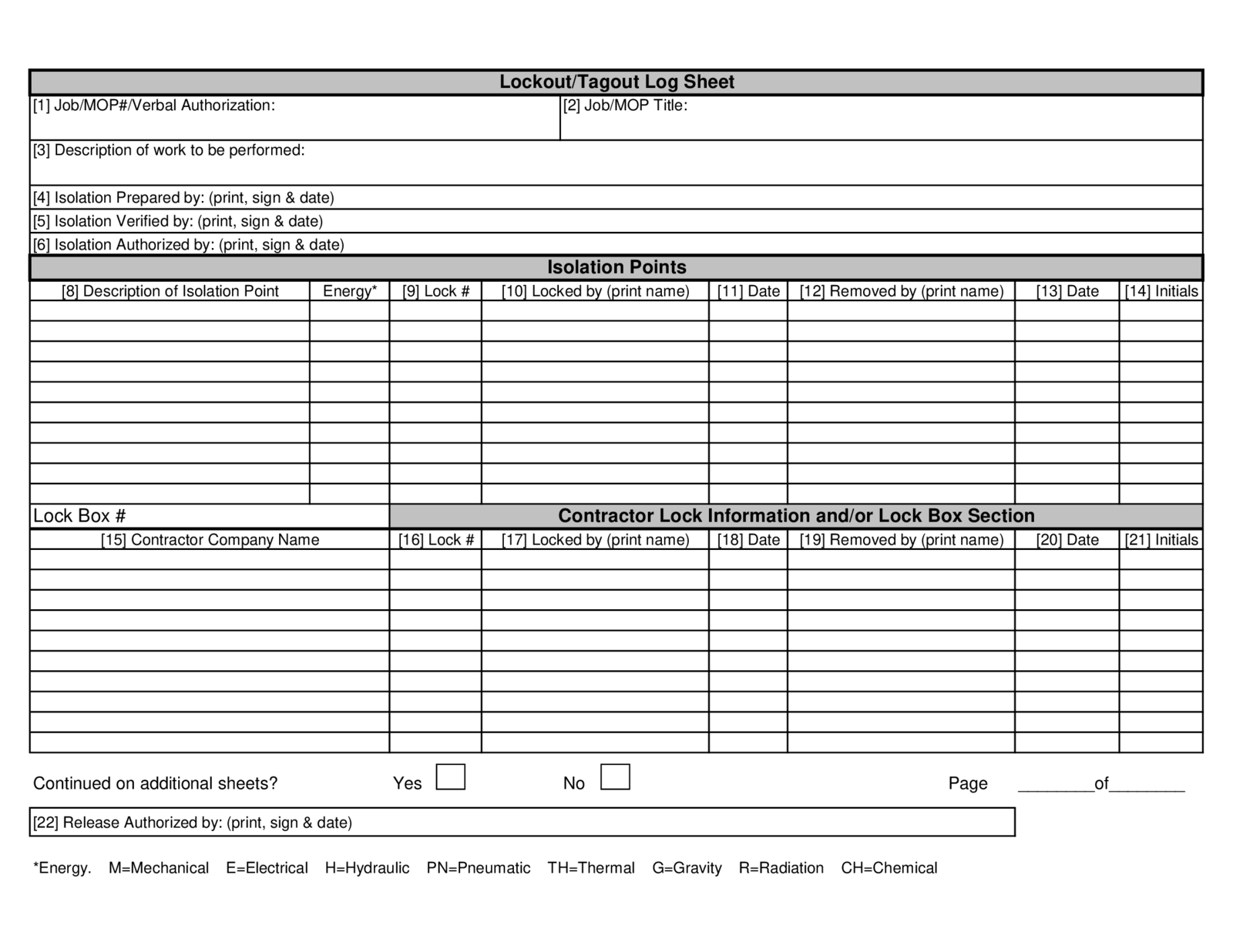
Not all sign out sheets are created equal. Many are scribbled on clipboards with missing fields or poor durability. A robust template should include:
- Equipment ID: Specific name, tag number, location
- Date and shift of lockout
- Primary authorized employee initiating the procedure
- List of all personnel applying locks, with signatures
- Start and end times for each lock applied
- Nature of work (e.g., bearing replacement, motor repair)
- Verification of isolation (e.g., “tested for zero energy”)
- Sign-off section for each worker removing their lock
- Final clearance approval by supervisor or lead technician
This structure turns the sheet into a chronological safety record—not an afterthought.
Example Field Use: Paper Mill Maintenance
At a paper mill in Wisconsin, a team of four—two electricians, one hydraulics tech, and a supervisor—shut down a calender stack for roll replacement. Each applied their lock and signed the sheet. The electricians worked on disconnecting drive motors, while the hydraulics tech depressurized fluid lines.

When the roll replacement was complete, the supervisor reviewed the sign out sheet before initiating re-energization. He noticed one electrician hadn’t signed off. A quick radio check confirmed the technician was still verifying grounding points. Ten minutes later, after final checks, the last signature was added—and only then was the equipment restarted.
This process prevented a premature startup that could have energized circuits still under test.
Common Mistakes That Undermine LOTO Sign Out Sheets
Even experienced teams make errors that render sign out sheets useless. The most frequent include:
- Blank fields left unfilled – missing signatures or timestamps break traceability
- Using pencil – easily erased, not compliant for audits
- No central visibility – sheets kept in lockboxes or personal notebooks
- Delayed signing – workers sign after re-energization, defeating the purpose
- Lack of training on proper use
One refinery discovered 27% of their LOTO forms during an internal audit had incomplete sign-out sections. Some had no end times; others had illegible names. OSHA fines followed.
Workflow Tip: Integrate
with Permit-to-Work Systems
In complex industrial settings, link the LOTO sign out sheet to the permit-to-work (PTW) system. When the work permit is issued, the LOTO sheet is automatically generated with pre-filled equipment data. Upon completion, the digital sign out triggers permit closure and notifies operations staff.
This integration reduces duplication, improves accuracy, and enforces sequence.
Digital vs. Paper Sign Out Sheets: What Works Best?
While paper forms are still common, digital solutions are rising—especially in facilities with high maintenance volume or strict compliance demands.
| Feature | Paper Sheets | Digital Systems |
|---|---|---|
| Real-time visibility | No – must be physically checked | Yes – accessible from control room |
| Audit trail | Limited – prone to loss or damage | Full – timestamps, user IDs, changes |
| Integration | None | With CMMS, ERP, PTW |
| Durability | Low – damaged by oil, moisture | High – rugged tablets or kiosks |
| Training curve | Low | Moderate to high |
When Paper Still Makes Sense
Small workshops, infrequent maintenance, or remote sites with poor connectivity often find paper more practical. But the form must be weather-resistant, pre-printed, and stored in a designated LOTO station.
For larger operations, digital platforms offer superior control.
Top 5 LOTO Sign Out Sheet Solutions
1. iAuditor by SafetyCulture
- Cloud-based checklists with LOTO templates
- Photo evidence and digital signatures
- Real-time reporting and alerts
- Works offline on mobile devices
Best for: Mid-sized manufacturers wanting rapid digital adoption without custom development.
2. LockOut/TagOut Pro by Seton
- Pre-printed, multi-copy forms with carbonless duplication
- Includes sign in/out fields, equipment ID, supervisor approvals
- Complies with ANSI and OSHA standards
Best for: Facilities preferring paper but needing standardized, professional forms.
3. Fiix by Rockwell Automation
- CMMS-integrated LOTO workflows
- Automatically generates sign out sheets from work orders
- Tracks lock usage and technician compliance
Best for: Enterprises with existing CMMS infrastructure.
4. EHS Insight LOTO Module
- Full lifecycle management: assign locks, track usage, audit sign outs
- Customizable digital forms with approval routing
- Built-in OSHA compliance reports
Best for: Safety managers in regulated industries (pharma, chemicals).
5. Custom-Built Google Workspace Solution
- Free: Use Google Forms + Sheets + Docs
- Create a LOTO form that populates a master log
- Add QR codes on equipment linking to digital sign out
Best for: Budget-conscious teams needing basic digital tracking.
How to Audit Your LOTO Sign Out Process
An unreviewed sign out sheet is a false sense of security. Conduct quarterly audits using this checklist:
✅ All fields completed before re-energization ✅ Signatures match authorized LOTO personnel list ✅ Lock numbers on sheet match physical locks ✅ No evidence of post-completion signing ✅ Sheets stored for minimum 1 year (OSHA requirement) ✅ Supervisor review documented
During one audit, a food processing plant found workers were pre-signing blank sheets “to save time.” This practice invalidated the entire LOTO procedure. Retraining and digital controls were implemented immediately.
Beyond the Sheet: Building a LOTO Culture
The sign out sheet is a tool—not a substitute for discipline. Foster a culture where:
- Every lock tells a story, and every signature is a promise
- Workers feel empowered to challenge incomplete sign outs
- Supervisors verify, not assume
- Near-misses related to LOTO are reported and reviewed
One plant reduced LOTO incidents by 78% over 18 months by introducing “LOTO spot checks” during safety meetings. Teams reviewed real (anonymous) sign out sheets and discussed improvements.
Final Step: Make It Part of the Routine
A lockout tagout sign out sheet should be as routine as wearing a hard hat. It’s not extra work—it’s the final guardrail before danger.
Start by auditing your current forms. Are they clear? Are they used consistently? Upgrade to digital if paper fails you. Train everyone—not just authorized employees, but affected staff—on its importance.
Then post it where it matters: at the equipment, in the permit system, in your safety meetings. Because when the power comes back on, the only thing louder than the machine should be your confidence that every person is clear.
What is a lockout tagout sign out sheet? It’s a documented log that records who applied and removed energy control locks, ensuring all workers are accounted for before re-energizing equipment.
Who should sign the LOTO sign out sheet? Every authorized employee who applied a lock must sign when they remove it. A supervisor may provide final clearance.
Can you use a digital sign out sheet for LOTO? Yes, if it provides equivalent or better control, including signatures, timestamps, and auditability.
How long should LOTO sign out sheets be kept? OSHA requires documentation be retained for at least one year for compliance audits.
What happens if someone forgets to sign out? Re-energization must be delayed until contact is made or verification occurs. Never assume absence of a signature means clearance.
Should the sign out sheet stay with the equipment? Yes—it should be visibly attached or located at the lockout point for real-time access.
Can a sign out sheet prevent all LOTO accidents? No single tool is foolproof, but when used correctly, it drastically reduces risk by enforcing communication and verification.
FAQ
What should you look for in Lockout Tagout Sign Out Sheet Essentials for Safety Compliance? Focus on relevance, practical value, and how well the solution matches real user intent.
Is Lockout Tagout Sign Out Sheet Essentials for Safety Compliance suitable for beginners? That depends on the workflow, but a clear step-by-step approach usually makes it easier to start.
How do you compare options around Lockout Tagout Sign Out Sheet Essentials for Safety Compliance? Compare features, trust signals, limitations, pricing, and ease of implementation.
What mistakes should you avoid? Avoid generic choices, weak validation, and decisions based only on marketing claims.
What is the next best step? Shortlist the most relevant options, validate them quickly, and refine from real-world results.