A machine stops. Power is off. The maintenance team moves in—only one worker doesn’t know someone else re-energized the system upstream. Seconds later, a catastrophic injury occurs. This isn’t hypothetical. It’s why OSHA mandates lockout tagout (LOTO) procedures—and why a properly maintained lockout tagout log PDF is not just paperwork, but a lifeline.
The lockout tagout log records every instance a machine is de-energized for maintenance or repair. It’s the central documentation point confirming who locked out equipment, when, why, and who verified its safe return to operation. When stored as a downloadable and printable PDF, it becomes a portable, standardized, and auditable safety artifact.
Yet many facilities still rely on handwritten sheets, lost spreadsheets, or no logs at all. That’s a compliance time bomb. This guide breaks down everything you need to know about the lockout tagout log PDF—what it must include, how to use it effectively, where to get trustworthy templates, and common flaws that undermine its purpose.
What Belongs in a Lockout Tagout Log PDF?
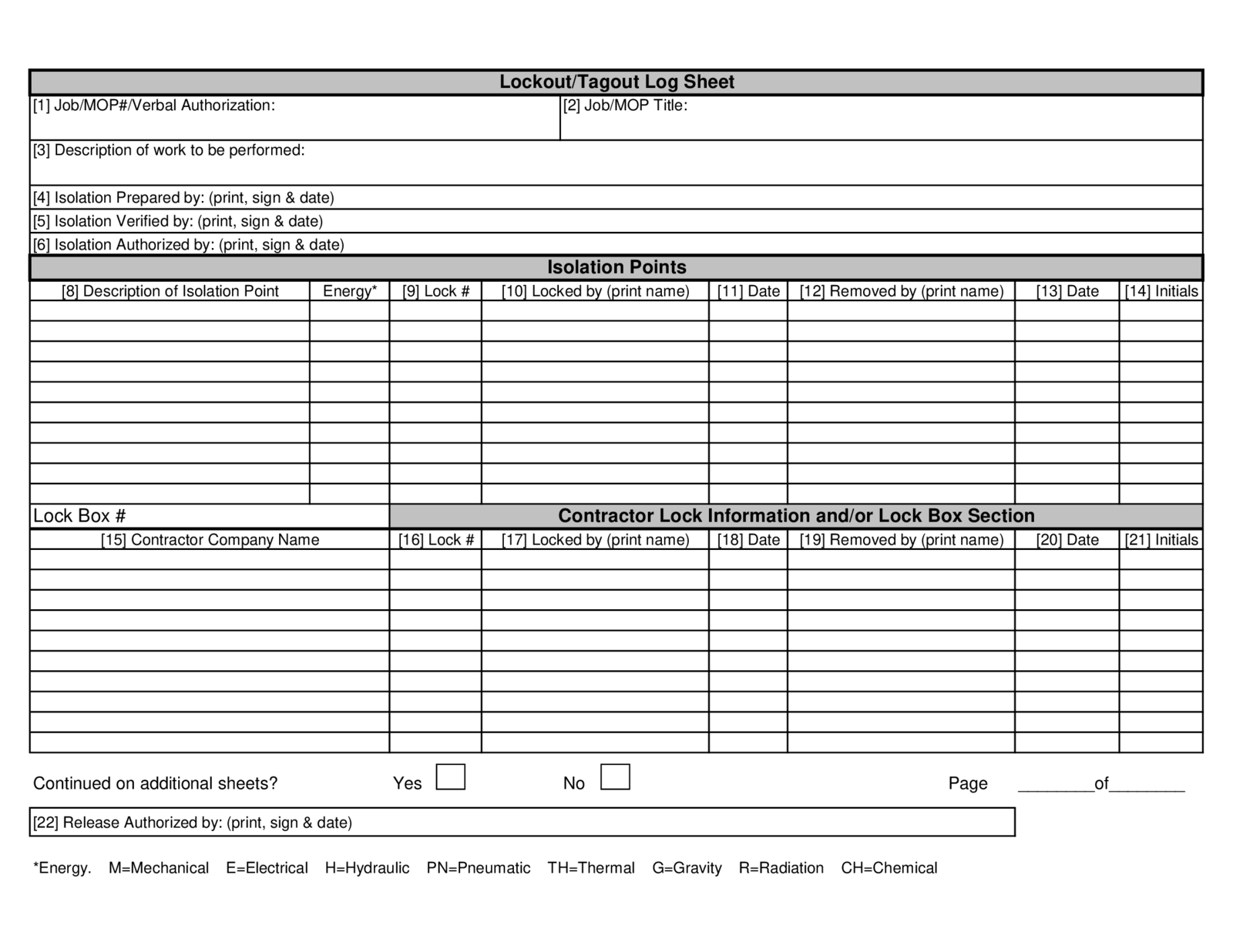
A high-functioning LOTO log isn’t just a timestamp and a name. It’s a forensic record that must withstand regulatory scrutiny and internal audits. A complete lockout tagout log PDF should include:
- Equipment identifier (name, ID, or location)
- Date and time of lockout initiation
- Authorized employee name and ID applying the lock
- Type of energy sources isolated (electrical, hydraulic, pneumatic, thermal, etc.)
- Lock and tag numbers used
- Nature of service or maintenance
- Time and name of employee verifying zero energy
- Date and time of equipment re-energization
- Name of employee removing lock and tag
- Supervisor approval (where required)
Leave out any of these, and you risk incomplete accountability. For example, omitting energy type could mean future workers assume only electrical isolation was done—missing a pressurized hydraulic line that still poses danger.
A well-structured PDF log prevents field improvisation. It forces discipline through design.
Real-World Use Cases: When the LOTO Log PDF Saves Lives
Case 1: Shift-Overlap Maintenance A CNC machine requires overnight calibration. The night-shift technician applies a lock, tags it, and logs it in the PDF register. The morning crew arrives. Before starting, the lead supervisor checks the LOTO log PDF—still active. They know not to power up. The log prevents a startup during servicing.
Mistake avoided: Unauthorized re-energization due to poor communication.
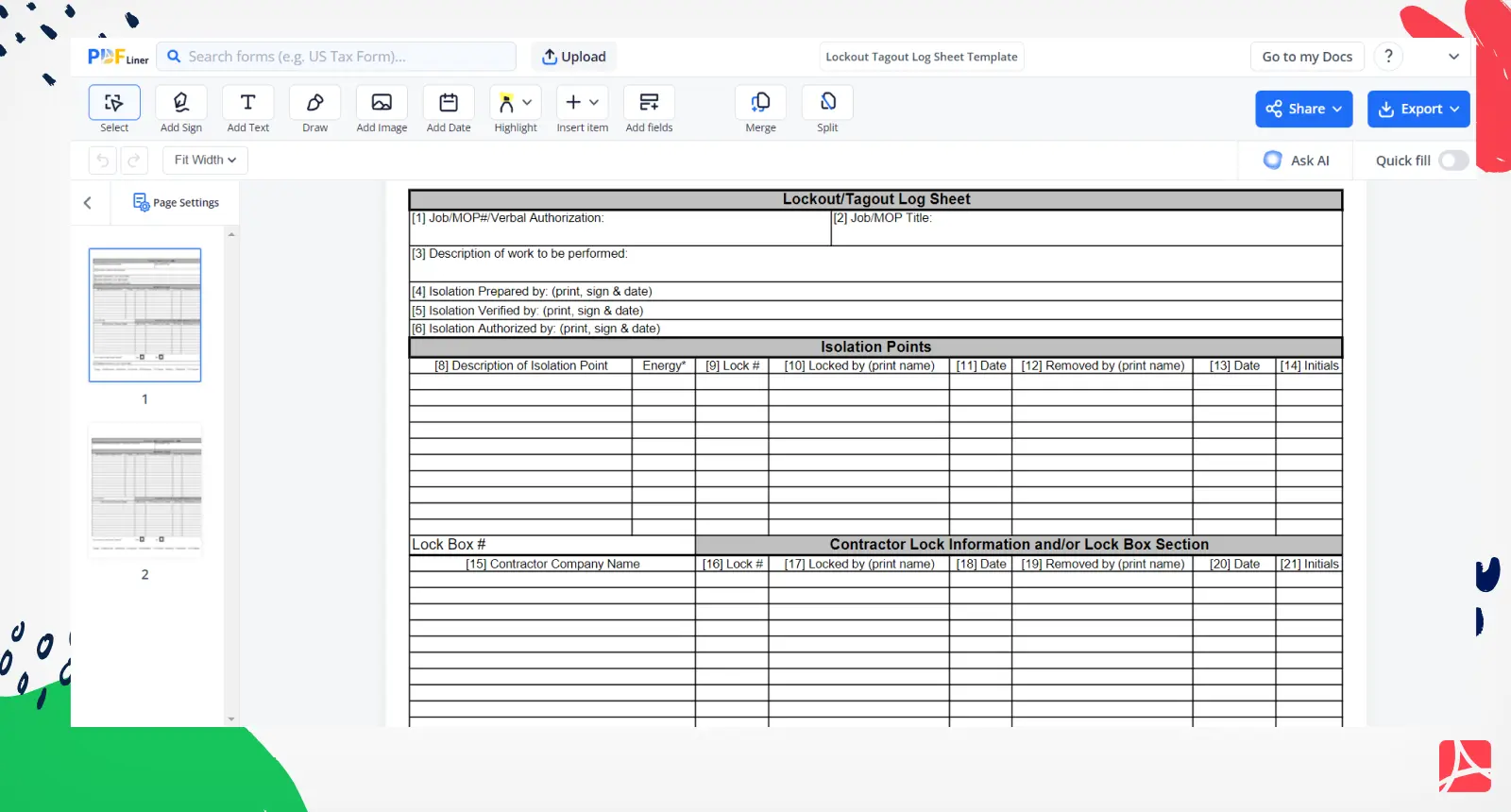
Case 2: Contractor Work An external HVAC technician locks out a rooftop unit. They’re unfamiliar with internal protocols, but the site’s standardized PDF log includes a guest user section. Their supervisor co-signs. Later, during an OSHA audit, the digital PDF timestamp and signature block prove compliance—even for third parties.
Mistake avoided: Assumption that contractors “know the rules.”
Case 3: Emergency Bypass Attempt A production manager tries to override a lock to meet a deadline. They’re stopped when they can’t produce a completed log entry showing re-energization approval. The PDF log acts as a procedural gatekeeper.
Mistake avoided: Pressure-driven safety compromise.
These aren’t edge cases—they’re daily risks in high-output environments. A standardized PDF log mitigates them by design.
Common Flaws in Lockout Tagout Log PDFs
Even when facilities use a PDF log, many undermine its effectiveness through preventable errors.
1. Static Templates with Blank Fields Some downloadable LOTO log PDFs are just forms with no guidance. Workers skip fields, misinterpret labels, or leave dates ambiguous (“3/5” — March or May?).
✅ Fix: Use templates with embedded instructions (e.g., “MM/DD/YYYY”) and field validation hints.
2. No Version Control A facility updates its LOTO policy but keeps using old PDFs. Employees reference outdated procedures.
✅ Fix: Include a version number and revision date in the footer. Archive obsolete versions.
3. Not Mobile-Friendly Technicians in remote areas can’t access the central PDF. They “remember to log later”—and forget.
✅ Fix: Use PDFs optimized for tablets or pair with cloud storage (Google Drive, SharePoint) for real-time access.
4. Missing Digital Signatures Handwritten signatures scanned into a PDF are often illegible or unverifiable.
✅ Fix: Use fillable PDFs that support digital signature fields compliant with electronic record standards.
5. No Integration with Broader LOTO Program The log exists in isolation—untied to equipment-specific energy control procedures (ECPs).
✅ Fix: Hyperlink the PDF to related ECPs or include a QR code on printed versions.
A lockout tagout log PDF isn’t effective just because it exists. It’s effective when designed for real-world use.
Where to Get Reliable Lockout Tagout Log PDF Templates
You can build your own, but pre-made, compliant templates save time and reduce risk. Below are five vetted sources offering free, downloadable lockout tagout log PDFs:
| Source | Features | Best For |
|---|---|---|
| OSHA Official Website | Basic but legally aligned, minimal fields | Facilities needing bare-minimum compliance |
| National Safety Council (NSC) | Full workflow integration, supervisor sign-off | Mid to large operations with layered approvals |
| Creative Safety Supply | Visual design, color-coded sections, multilingual | High-turnover or multilingual teams |
| EHS Daily Advisor (by BLR) | Editable fields, digital signature support | Facilities transitioning to digital records |
| SafetyCulture (iAuditor) | Exportable PDFs from mobile audits, cloud sync | Modern, tech-forward safety programs |
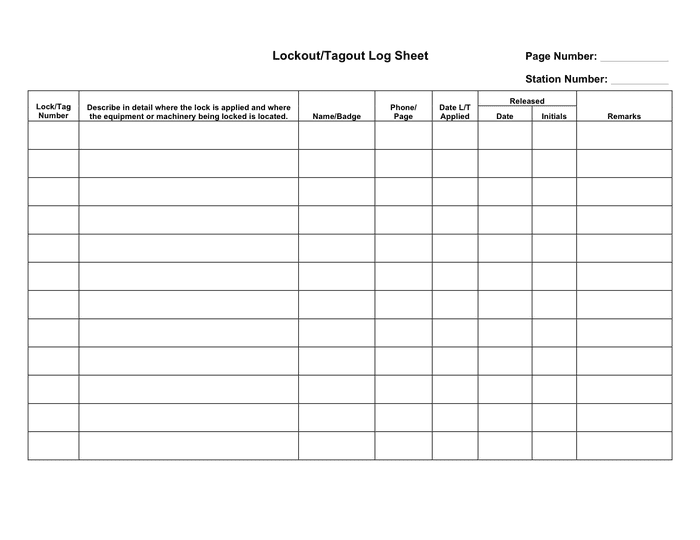
Each offers a downloadable PDF, but not all are created equal. OSHA’s version ensures baseline compliance. Creative Safety Supply’s template excels in usability. For long-term scalability, SafetyCulture’s platform generates PDF logs from mobile inspections—ideal for distributed teams.
Choose based on your operational complexity, not just availability.
How to Implement the LOTO Log PDF in 4 Steps
Adopting a lockout tagout log PDF isn’t just about downloading a form. It’s a process.
Step 1: Customize the Template Add your company name, logo, site-specific equipment list, and required fields. Remove irrelevant sections to prevent confusion.
Step 2: Train Authorized Employees Don’t assume workers know how to use it. Conduct hands-on drills: simulate a lockout, complete the PDF, review for errors.
“The log isn’t complete until the last signature is in—and verified.” — Senior Safety Engineer, Automotive Manufacturing Plant
Step 3: Establish Access Protocols Where is the master PDF stored? Can night-shift workers access it? Use shared drives with role-based permissions. Print backup copies in high-risk zones.
Step 4: Audit Monthly Pull a sample of completed PDF logs. Check for: - Consistent timestamps - Matching lock/tag numbers - Verification signatures - Correct equipment IDs
Flag anomalies. Recurrent gaps signal training or workflow issues.
Routine auditing turns the PDF from a passive record into an active safety tool.
Legal and Compliance Implications of Incomplete LOTO Logs
OSHA standard 29 CFR 1910.147(c)(4)(i) explicitly requires employers to document each energy-control procedure, including periodic inspections and employee certification.
Failure to maintain a complete, accessible lockout tagout log PDF can result in:
- Fines up to $15,625 per violation (2024 penalty levels)
- Increased scrutiny during inspections
- Criminal liability in case of injury or death
- Worker compensation claims with higher payouts
More importantly, incomplete logs erode a culture of safety. When workers see procedures inconsistently enforced, they cut corners.
A proper PDF log isn’t just about avoiding penalties—it’s about proving due diligence.
Digital vs. PDF: What’s the Future?
While fillable PDFs are a major step up from paper, the future lies in integrated digital LOTO systems. These platforms auto-generate logs, sync across devices, and flag conflicts in real time.
But for most facilities, a well-designed lockout tagout log PDF strikes the optimal balance: - Low cost - No software dependency - OSHA-acceptable - Portable and printable
Until full digitization is feasible, the PDF remains the most practical, widely accepted format.
Final Thoughts: Make the LOTO Log PDF a Living Document
A lockout tagout log PDF should never be a forgotten file in a drawer. It’s the audit trail of your safety culture—visible, verifiable, and vital.
Download a compliant template. Customize it. Train your team. Audit it monthly. Treat it not as bureaucracy, but as a frontline defense.
Because when a machine powers up unexpectedly, the only thing standing between a worker and tragedy is process—and the paper (or PDF) that proves it was followed.
Frequently Asked Questions
What is a lockout tagout log PDF used for? It documents every LOTO event, including who locked out equipment, when, and what energy sources were controlled—ensuring accountability and compliance.
Is a PDF log acceptable for OSHA compliance? Yes, as long as it’s complete, accurate, accessible, and includes required fields like employee names, dates, and verification.
Can multiple workers use the same LOTO log PDF? Yes. The log should list all authorized employees involved in the lockout, each applying their own lock and tag.
How long should completed LOTO log PDFs be kept? At minimum, one year—though OSHA recommends retaining them as long as they remain relevant for audits or incident investigations.
Can I edit a lockout tagout log PDF? Use fillable PDFs with editable fields. Never alter a completed log; corrections should be initialed and dated.
Do I need a separate log for each machine? No. A single log can track multiple machines, as long as entries are clearly separated and equipment is uniquely identified.
Where should the LOTO log PDF be stored? In a central, accessible location—digitally on a shared drive or printed in a binder at the facility’s safety station.
FAQ
What should you look for in Lockout Tagout Log PDF: Free Templates and Best Practices? Focus on relevance, practical value, and how well the solution matches real user intent.
Is Lockout Tagout Log PDF: Free Templates and Best Practices suitable for beginners? That depends on the workflow, but a clear step-by-step approach usually makes it easier to start.
How do you compare options around Lockout Tagout Log PDF: Free Templates and Best Practices? Compare features, trust signals, limitations, pricing, and ease of implementation.
What mistakes should you avoid? Avoid generic choices, weak validation, and decisions based only on marketing claims.
What is the next best step? Shortlist the most relevant options, validate them quickly, and refine from real-world results.