Every time a machine is serviced, there’s a risk—sometimes silent, always serious—of unexpected startup or hazardous energy release. The lockout tagout (LOTO) sign out sheet is not just paperwork; it's the final checkpoint before re-energizing equipment. Get it wrong, and you risk injury, downtime, or OSHA penalties. Get it right, and you close the loop on a safe maintenance cycle.
Yet countless facilities use inconsistent, incomplete, or non-standardized sign out sheets. That’s a liability. This guide breaks down what a proper LOTO sign out sheet template must include, how to customize it, and where to get reliable, ready-to-use versions.
What Is a Lockout Tagout Sign Out Sheet?
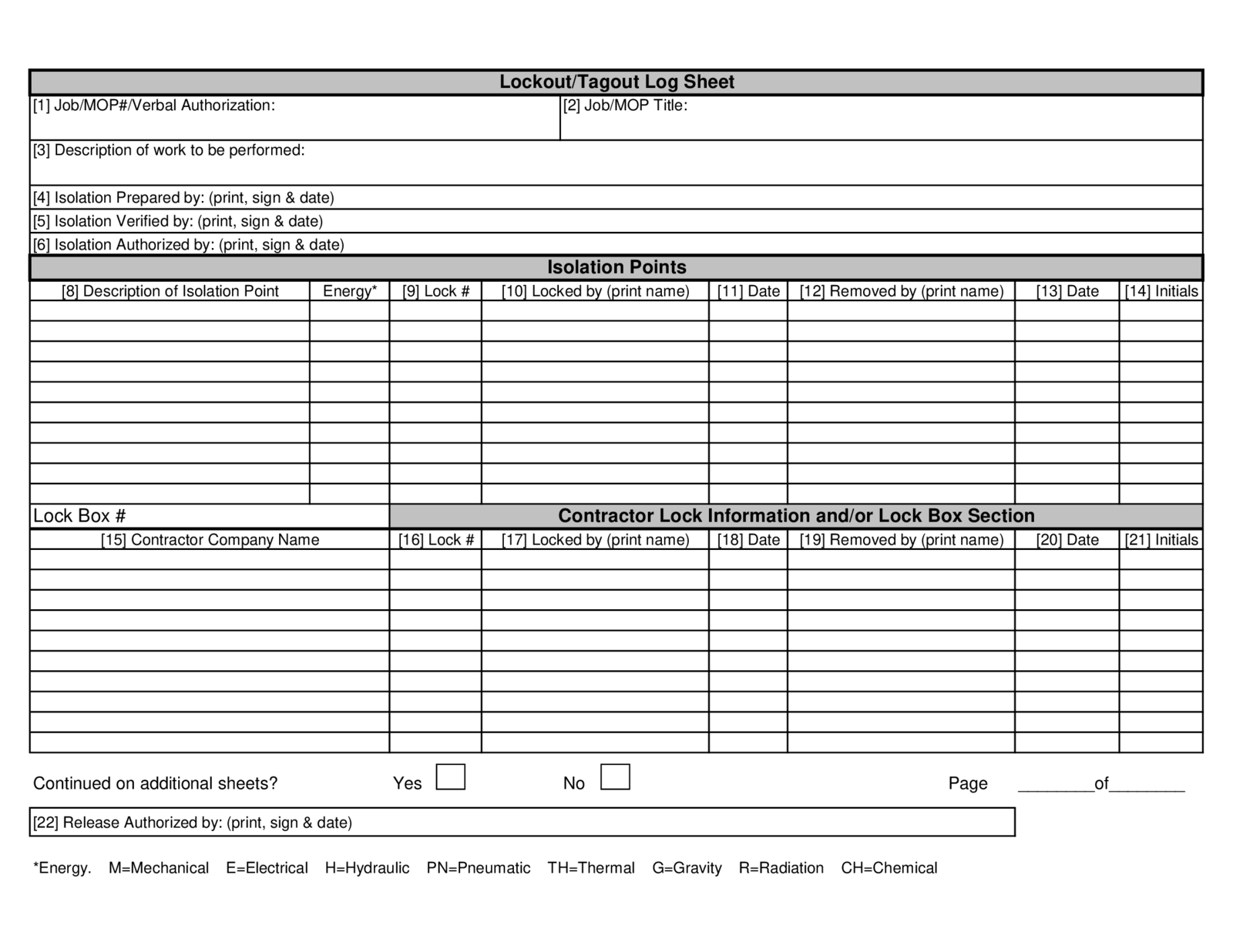
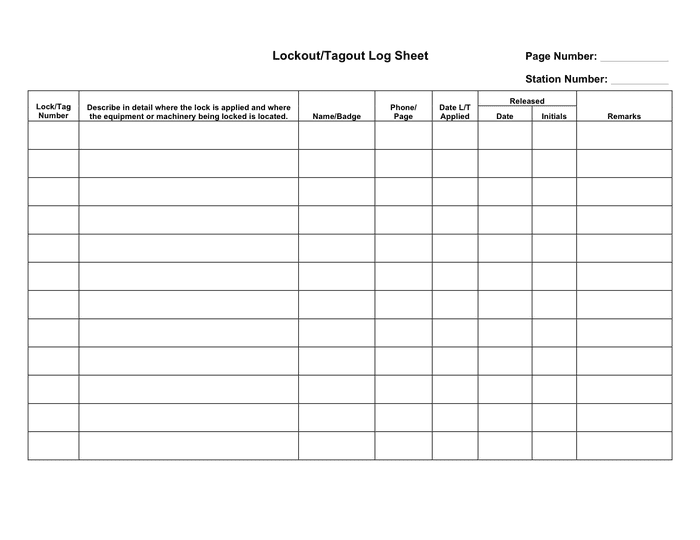
The LOTO sign out sheet is the formal record used when maintenance or servicing concludes. It documents the removal of lockout devices and confirms that all employees are clear, tools are removed, and equipment is safe to return to operation.
Unlike the lockout application form—which starts the isolation process—the sign out sheet ends it. It ensures accountability and traceability.
Think of it as the "clear to resume" signal in a high-stakes workflow. Without it, restarting machinery becomes an act of trust instead of verification.
Common Misconception: Many believe that removing personal locks is enough. But OSHA 1910.147 requires documented verification before re-energizing equipment. That’s where the sign out sheet comes in.
Key Elements Every Sign Out Sheet Must Include
A weak template invites errors. A robust one prevents them. Here’s what every effective sign out sheet should contain:
1. Equipment Identification
- Machine name, ID number, location
- Specific energy sources isolated (electrical, hydraulic, pneumatic, etc.)
2. Maintenance Summary
- Work performed
- Duration of service
- Maintenance team lead
3. Lock Removal Log
- List of each authorized employee who applied a lock
- Signature and time of lock removal
- Verification that the individual removed their own device
4. Clearance Verification
- Confirmation that all tools, parts, and personnel are clear
- Pre-restart inspection notes
5. Final Authorization
- Supervisor or lead technician sign-off
- Date and time of re-energization
6. Emergency Override Notes (Optional but Recommended)
- If bypass occurred, document reason, personnel involved, and mitigation steps
Leaving out any of these fields creates audit gaps. For example, omitting individual lock removal signatures makes it impossible to prove that each worker personally de-energized their device—a direct OSHA violation.
Real-World Example: Using the Sign Out Sheet in a Manufacturing Plant
At a Midwest automotive parts facility, a press operator was injured when a conveyor restarted during belt alignment. Investigation revealed that while five technicians had locked out the system, only three signed the informal log. One lock was removed by a supervisor assuming the worker had left.
The root cause? No standardized sign out sheet requiring individual verification.
- Corrected Process:
- After maintenance, the lead calls a team huddle at the disconnect point.
- Each technician presents their lock.
- On the sign out sheet, they initial and sign next to their lock ID.
- Supervisor confirms visual clearance and tools removed.
- Final sign-off allows restart.
They adopted a color-coded sign out sheet with numbered lock fields. Incidents dropped to zero over the next 18 months.
This is not about bureaucracy—it’s about behavioral safety design.
Common Mistakes That Undermine LOTO Sign Out Procedures
Even with a template, organizations fail in execution. Watch for these pitfalls:
❌ Using a Combined Lockout/Sign Out Form Merging both actions into one document increases confusion. Workers might sign out before work is complete. Keep them separate.
❌ Allowing Blank or Unsigned Fields A missing signature invalidates the entire chain of compliance. Train staff that incomplete forms = equipment stays locked.
❌ Accepting Digital Photos Instead of Physical Sheets Photos of completed forms aren’t sufficient for OSHA. You need a physical or authenticated digital record tied to the job.
❌ Failing to Archive Past Sign Outs Records must be kept for at least one year (OSHA standard). Cloud storage with access logs meets this—file cabinets without indexing do not.
❌ Assuming One Template Fits All A chemical plant’s sign out needs differ from a food processing line. Customize for energy type, equipment complexity, and team size.
How to Customize Your LOTO Sign Out Sheet Template
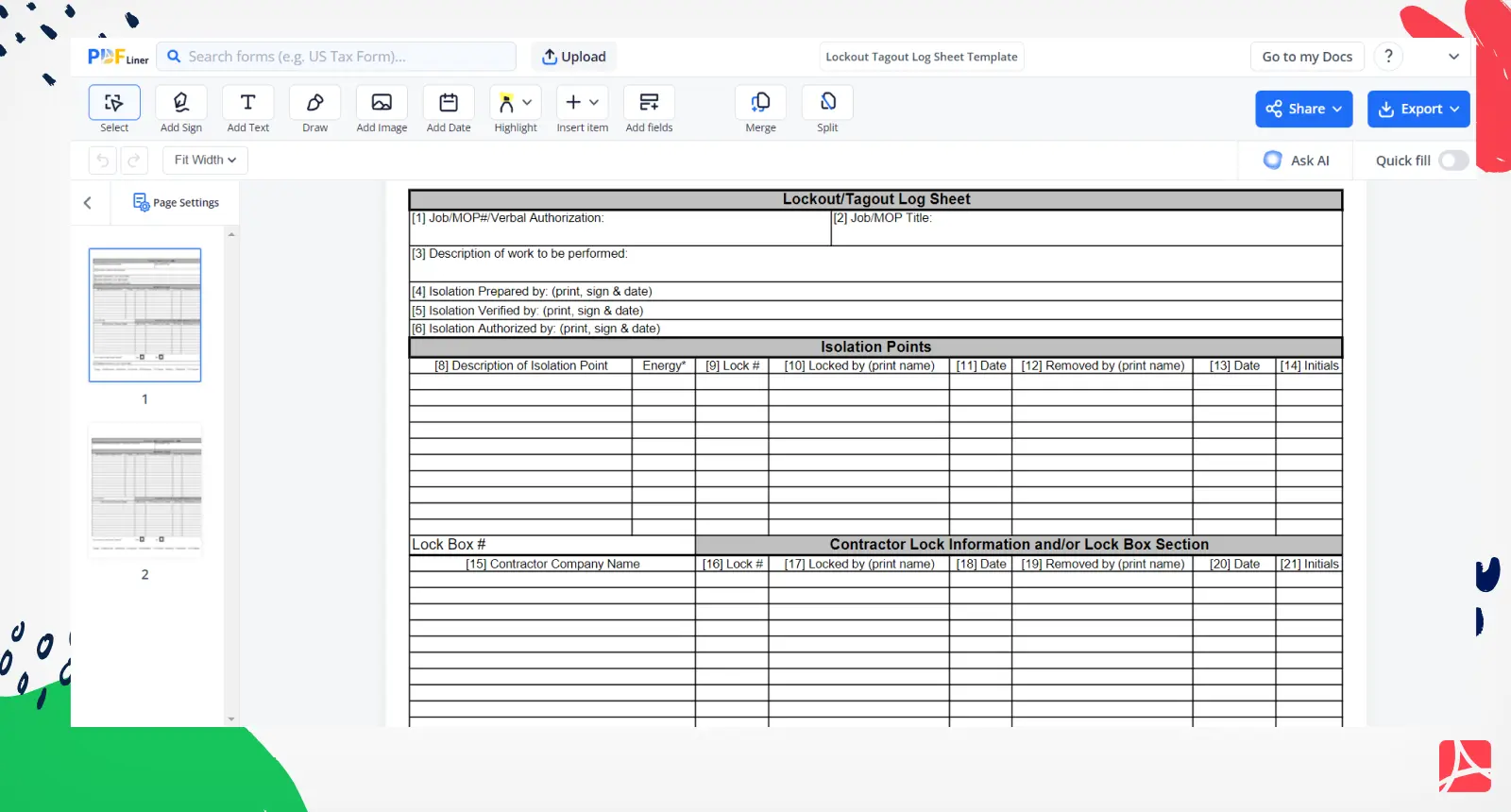
A generic PDF won’t cover your unique operations. Tailor your template with these steps:
Step 1: Map High-Risk Equipment List machines with multiple energy sources or frequent maintenance. These need more detailed sign out fields.
Step 2: Involve Maintenance Teams Have technicians review the draft. They’ll spot missing fields or impractical layouts.
Step 3: Add Visual Cues Use shaded sections, checkboxes, or bold headers to guide users. Example: > ⚠️ WARNING: Do not re-energize until every lock is accounted for.
Step 4: Integrate with LOTO Procedures Link the sign out sheet to your written energy control program. Reference it in training materials.
Step 5: Test and Revise Run a 30-day pilot. Collect feedback. Adjust spacing, wording, or fields.

Pro Tip: Use landscape layout for large teams—more space for signatures and notes.
5 Reliable Sources for Free LOTO Sign Out Sheet Templates
Don’t build from scratch. Start with proven designs:
| Tool | Features | Best For |
|---|---|---|
| OSHA.gov | Official PDFs, compliant layout, minimal design | Facilities needing basic, auditable forms |
| Creative Safety Supply | Editable Word & PDF, visual warnings, multilingual | High-turnover or diverse teams |
| EHS Daily Advisor | Fully customizable Excel templates | Sites with digital logging systems |
| SafetyCulture (iAuditor) | Cloud-based sign out with photo proof, real-time sync | Digital-forward operations |
| LockoutTagout.com | Industry-specific templates (HVAC, manufacturing, labs) | Niche environments with complex energy types |
Each of these offers downloadable, editable versions. Avoid random blog templates—many lack required fields or use outdated language.
Digital vs. Paper Sign Out Sheets: Which Should You Use?
The debate isn't about going paperless—it's about reliability and compliance.
Paper Sheets: - ✅ Low cost, no tech required - ✅ Easy to use in remote or hazardous zones - ❌ Prone to loss, damage, or forgery - ❌ Hard to search or audit
Digital Systems: - ✅ Automatic timestamps, user authentication, cloud backup - ✅ Instant alerts if a lock isn’t removed - ❌ Requires devices, training, IT support - ❌ Risk of system downtime
Hybrid Approach Wins: Use paper as backup during outages, but store scans digitally. This meets OSHA standards and builds resilience.
For example, a pharmaceutical plant uses tablets at each LOTO station. If Wi-Fi drops, workers complete paper copies, which are scanned and uploaded within 2 hours.
Final Sign-Off Isn’t the End—It’s Part of a Cycle
A completed sign out sheet doesn’t just close a maintenance event. It feeds into continuous improvement:
- Audit trails for incident investigations
- Metrics on average lockout duration
- Training gaps (e.g., frequent unsigned fields)
Review sign out sheets monthly. Look for patterns: - Are certain machines consistently delayed? - Do junior technicians skip verification steps? - Is one shift bypassing clearance checks?
Use the data to refine training, update templates, or redesign workflows.
Get It Right: Download, Customize, Enforce
A lockout tagout sign out sheet template isn’t a formality—it’s a final safety net. Start with a compliant, well-structured template from a trusted source. Customize it for your team and equipment. Train everyone to treat it as non-negotiable.
Then, enforce it consistently. Because when the machine powers back on, the only thing louder than the motor should be your confidence that every step was verified.
Download a free, editable LOTO sign out sheet today. Test it. Improve it. Make it part of your safety DNA.
Frequently Asked Questions
What is the purpose of a lockout tagout sign out sheet? It documents the safe removal of lockout devices and verifies that equipment can be safely re-energized after maintenance.
Who should sign the LOTO sign out sheet? Each authorized employee who applied a lock must sign when they remove it, plus a supervisor for final approval.
Does OSHA require a sign out sheet? While OSHA 1910.147 doesn’t use the term “sign out sheet,” it requires verification before re-energizing, which a sign out sheet provides.
Can I use a digital sign out sheet? Yes, if it includes secure user authentication, timestamps, and retrievable records—meeting OSHA’s documentation requirements.
How long should I keep completed sign out sheets? At least one year, as per OSHA standards for energy control program records.
What if a worker forgets their lock combination? The lock may be removed under supervision, but the incident must be documented on the sign out sheet with justification.
Should contractors be included on the sign out sheet? Absolutely. Any outside worker applying a lock must be listed and sign upon removal, just like internal staff.
FAQ
What should you look for in Lockout Tagout Sign Out Sheet Template Guide & Free Download? Focus on relevance, practical value, and how well the solution matches real user intent.
Is Lockout Tagout Sign Out Sheet Template Guide & Free Download suitable for beginners? That depends on the workflow, but a clear step-by-step approach usually makes it easier to start.
How do you compare options around Lockout Tagout Sign Out Sheet Template Guide & Free Download? Compare features, trust signals, limitations, pricing, and ease of implementation.
What mistakes should you avoid? Avoid generic choices, weak validation, and decisions based only on marketing claims.
What is the next best step? Shortlist the most relevant options, validate them quickly, and refine from real-world results.